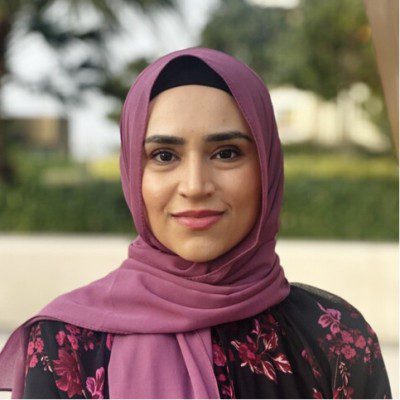
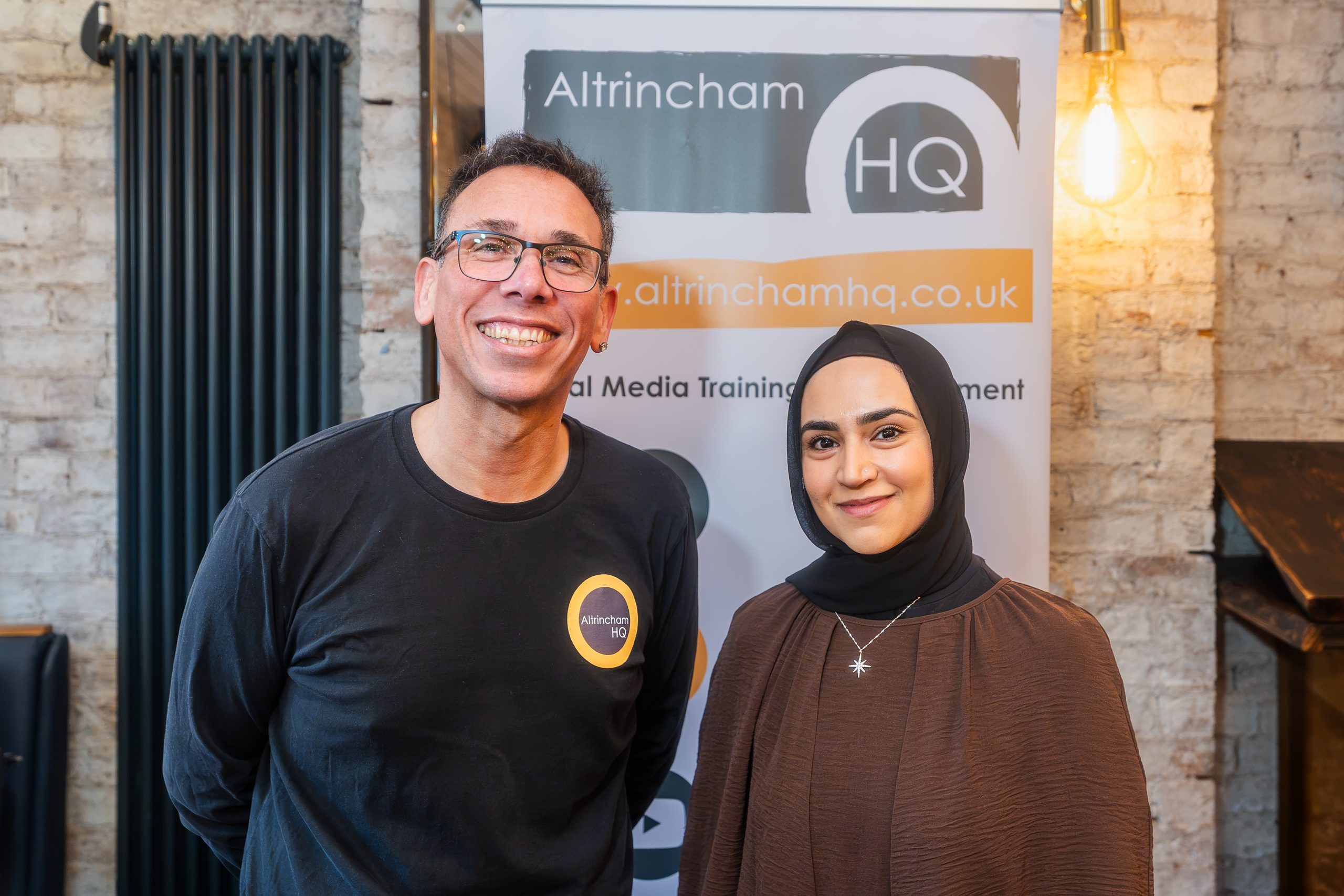
Hadeeqa Bibi is a clinical pharmacist, ADHD assessor and coach who never planned any of it. At a recent Altrincham HQ event she explained how she got here, what social media gets wrong about ADHD, and why you shouldn’t wait for a diagnosis to start helping yourself.
Hadeeqa Bibi is a clinical pharmacist, a neurodiversity practitioner and an ADHD coach. Ask her whether she planned any of that and the answer is a firm no. Today she assesses people for ADHD, prescribes and titrates medication, and coaches people with ADHD and other neurodivergent profiles to understand how their minds work and build strategies that suit them. Getting there took a school trip that put her off law, a pharmacy owner who read her CV properly, and a mother who never once told her what to do. After a few visits as an audience member, Hadeeqa took the hot seat at an Altrincham HQ event to explain how it happened, and to field some blunt questions about the state of the ADHD conversation.
It starts at home. Hadeeqa is the youngest of four, raised by a single mother. “A lot of that did shape what I do and the sort of outlook I have in life,” she says. Her mum juggled parenthood with whatever work she could fit around it, and the scale of that only sank in with age. “As a child you don’t really appreciate it when you’re young,” says Hadeeqa. Looking back, she sees the sacrifices clearly now. Being the youngest helped, she admits. Did she get away with everything? “I feel like I kind of did.” Her sister remembers those years differently. “It wasn’t that tough.”
Two phrases come up whenever Hadeeqa describes her mum: ambitious, and a work ethic. On ambition, she is clear. “She didn’t let anything hold her back.” Raising four children alone was never easy, and women had far less independence and fewer opportunities than they do now, “but she didn’t let that become a barrier.” She wanted her children to achieve the best, whatever that looked like, and Hadeeqa says that gave her a childhood free of the voice that says “I can’t do this.” On work ethic, the lesson was simple. “She didn’t think any job was small.” Whatever it took to get the family through, her mum did it. The results speak for themselves. One of Hadeeqa’s brothers is an orthopaedic surgeon and her sister is a SENCO teacher.
You might expect a mother like that to steer her youngest towards something serious. “That’s actually the weird thing she never did,” says Hadeeqa. “She never said you have to do this, or you have to do that.” The message was to do her best, and the pressure came from somewhere else entirely. “It wasn’t that I had to do it; it was because I wanted to do it to make her proud.”
Pharmacy is five years minimum once the training is counted, so was she sure? Not exactly. Young Hadeeqa wanted to be a lawyer, until a school trip to the magistrates convinced her “this is not for me.” She liked science and healthcare, but the other options came with problems. “I didn’t want to do medicine because I knew it was really long. I didn’t want to do dentistry because I didn’t want to look down people’s mouths.” Pharmacy was what was left. “I just thought pharmacy was the other option.”
Qualifying did not settle the question. She did the training year because she knew she could not qualify without it, and went “with the flow”, though she says “deep down, I knew this career wasn’t really what I wanted to do lifelong.” The clinical work was a bright spot. She enjoyed working in multidisciplinary teams alongside doctors and other healthcare professionals. Progression was the problem. “I think people hold you back because of the way the system is designed,” she says. In her experience the next person in line moves up, whether or not they have the skills for the role, which means a long wait for the next step. She could not see herself “being stuck in this” for another 20 years. So she kept her eyes open, took the clinical roles she enjoyed, and never said no to an opportunity.
Then came the turn. “I actually fell into it,” says Hadeeqa. During the Covid vaccination programme she was working with a pharmacy owner who supplied ADHD medication to companies carrying out assessments. He looked at her CV and told her she should be doing more with her qualifications, which by then included a postgraduate clinical diploma and her prescribing qualification. “I said why not?” It is a habit of hers. “Even if I feel like I’m not qualified, I always went for the opportunity.” A little training followed, then a lot of learning on the job, and in January 2023 she started as an ADHD assessor. The subject got under her skin, and she has been taking courses ever since, “because there’s so much more to it than what people think it is.”
Which brings us to LinkedIn. Scroll for five minutes and it can feel as if everyone has ADHD. Hadeeqa is not about to wave that away, but she does not buy it either. She puts it down to the time we live in, with technology, social media and things going viral. People pick up one or two traits mentioned in a clip, relate to them, and decide they have the answer. She finds that understandable. “But I wouldn’t really say that they necessarily do.” It is partly why she is on social media herself. “There’s a lot of information out there that’s not right or incorrect or lacks the evidence base behind it.” Her role there is to put out correct, evidence-based information. She recalls one video where someone said “if you do this weird thing with your ankle, you have ADHD.” Exactly what the weird thing was, she could not say, other than that the ankle was “moving up and down”.
Ask most people what ADHD looks like and they say trouble concentrating. Hadeeqa calls that a myth. “People with ADHD can concentrate; they just can’t regulate that concentration.” The difficulty is pointing focus at the thing that needs doing. Someone who loves crocheting, she says, can sit there for a full 24 hours doing it. Around that sits a lot more: regulating emotions, impulse control, which includes not thinking before acting or speaking, making decisions, and time management. That last one catches plenty of people out. They think they have more time than they do, or they estimate it badly, and decide to put the washing on before leaving the house. Then they are late.
So how does anyone actually get diagnosed? It can start with a GP who spots the signs, or a teacher, or an employer. A screening form follows, and many private providers now let people complete the screening on their website and move to assessment from there. If you go through the GP and you are referred to a provider. The assessment itself is “quite thorough”. Hadeeqa goes through history from birth to the present day, tracing development from childhood into adulthood and asking where the traits show up: school, work, relationships, family life. A big part of the job is working out why. Did it begin after a traumatic event? Is it down to poor sleep or anxiety? Or has it always been there, well hidden, and only shows now that life has become more demanding? She often asks people to bring along someone who has known them a long time for further evidence. If that isn’t possible, a form or an old school report can fill the gap.
Then there is the TikTok problem. Are videos telling people how to pass an ADHD assessment? “It is a thing,” says Hadeeqa. “People use buzzwords, and you can tell.” She hears people announce that they can hyperfocus for ages and are incredibly impulsive. “Where have you learned these words from?” Her job is to unravel it. Once rapport builds and people relax, the normal conversation reveals the real picture. The supposed hyperfocus turns out to be stress, or a week with too much going on with the kids. The shopping spree is a way to feel better in the moment. The questions become how long it has gone on and how often it happens, rather than what someone has seen on TikTok or ChatGPT.
After a diagnosis, there are options. Medication is one, and part of Hadeeqa’s clinical work is prescribing and titrating it. Coaching is separate, and she found it herself. Some of her patients could not take medication, or did not want to, so she went looking for alternatives. “Coaching felt very empowering.” She had only ever thought of sports coaches and business coaches. What coaching does is help people recognise what works for them and what doesn’t. The trap, she says, is copying everyone else. “People think that they need to do what everybody else is doing, and I think that’s where they go wrong.” After a diagnosis people also tend to fixate on the negatives. Turn that around, focus on strengths and use them, and “you get better outcomes.”
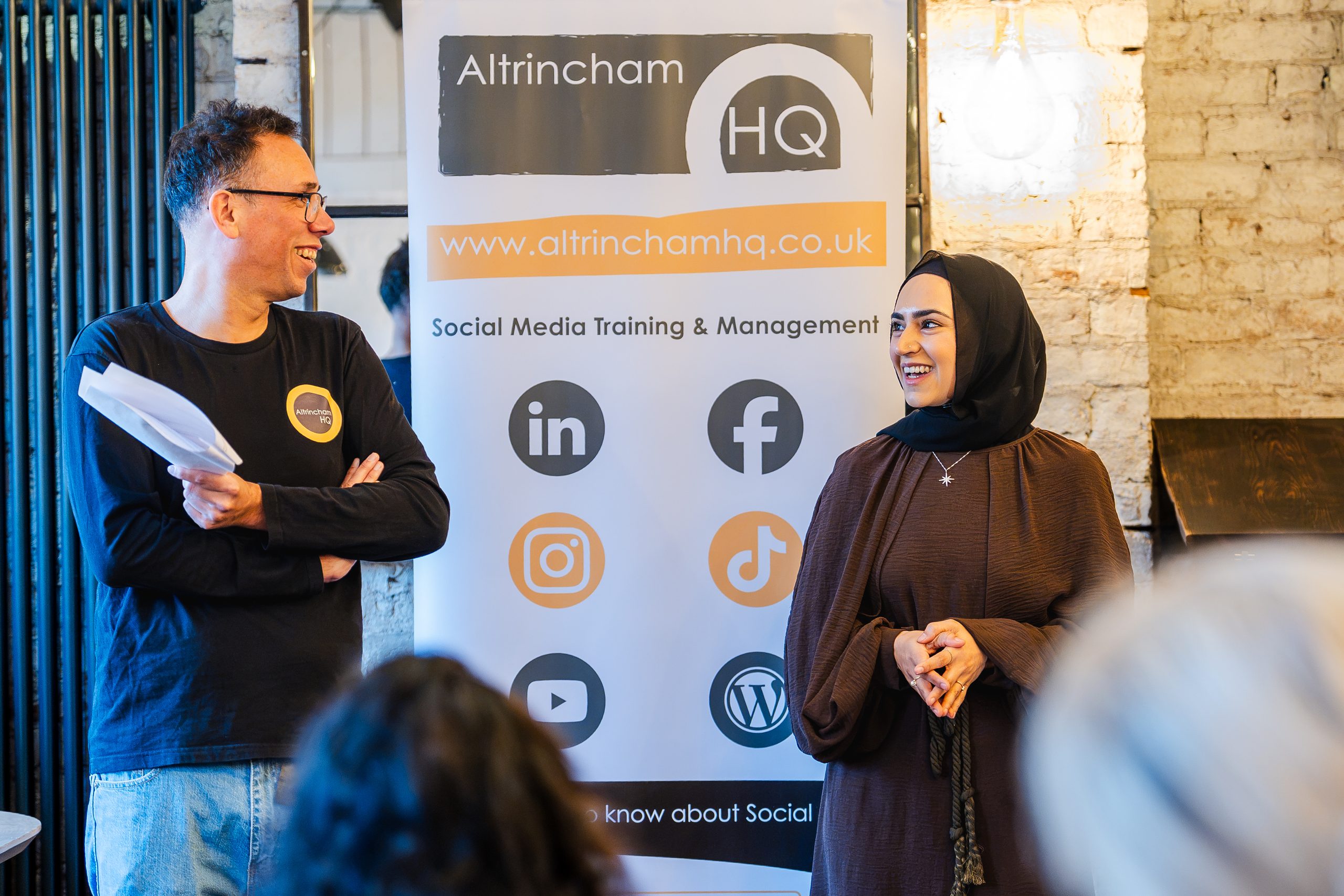
Her coaching clients are a mixture of individuals and organisations. She started the coaching business earlier this year, so it is still growing, and the plan is to branch out into workplaces, businesses and academic settings. She believes education and coaching should not hang on a diagnosis, and that the sooner support starts the better.
Her biggest wins are often conversations. Someone realises they have spent 20 years burning themselves out and overworking, when all they needed was to change their approach or let go. She sees it most with women. When perimenopause and menopause arrive, the coping systems stop working. Life has been about getting through school, then work, then a family, then the kids moving on, and somewhere in there nothing was done for themselves. “Actually, I didn’t do anything for myself” is what they realise. Then it hits. Hadeeqa’s job is helping them recognise that “it’s okay to slow down.”
Then came the headlines. Alex had picked a handful off Google, warning that some could be true and some could be false. First up: ADHD and autism at risk of over-diagnosis, says a government review. Hadeeqa says the debate has been in the media for a while, and that the findings did not back the headline. “They didn’t really find that it was overdiagnosed anyway.” Prevalence is supposed to be three to five per cent, she says, while diagnosis sits at only one to two per cent. “So if anything, they found that it was underdiagnosed.” Her own clients tell the story. Many of the women she sees are 40 plus and arrive because their children have been diagnosed. They start backtracking, realise “that’s me”, and remember they just got on with it because that is what they were told to do. She sees the debate as partly a case of a population now catching up.
Next headline: an ADHD education petition has reached 10,000 signatures. How much is that needed in schools? A lot, says Hadeeqa. Many adults who come for assessment struggled, and some never reached their potential because support arrived late or nobody knew what was going on. Educating younger people matters, and so does educating their peers. Many of her later-diagnosed patients went through bullying at school, “feeling left out and not being understood.” The surprise for her was learning that teachers aren’t trained on autism and ADHD. She asked her sister, the SENCO teacher, whether she had been. The answer was no. That set Alex off on the wider school system, with algebra and the Battle of Hastings on the syllabus but nothing on money management, running a business, or ADHD and autism. Anyone with contacts in education are invited to get in touch.
The train fare headline, that people with ADHD are entitled to a third off rail travel, has split opinion online, and Hadeeqa was split too. “I was a bit torn.” At first it seemed unfair, because the same logic could apply to any medical condition. Someone with asthma might struggle with the stairs and miss a train, as might someone with diabetes. Then she looked into it and found it is not automatic with a diagnosis. A healthcare professional has to validate the need first. And it can help, because neurodiverse people often struggle with planning, organisation and timekeeping. But she comes back to education. People need to learn what works for them and which strategies to put in place. Accommodations are good where they are justified, she says, but if every condition gets one, everybody will want the same.
How many people are living with a late diagnosis? A lot. The headline had Jools Oliver saying that not knowing she had ADHD “ruined” life for 45 years. Hadeeqa says the majority of her patients are middle-aged, and have gone for so long without answers. The cost is real. Relationships break down and careers go a different way than planned. Businesses collapse because the person is good at what they set out to do but struggles with the executive functioning side of running one. Parents misunderstand their children, and she has seen young people thrown out of the family home when neither side understood the emotional dysregulation involved. By 40, people look back. “Had I just known what this was, or had the right support, then things would have been different.” Then she asked the room. One hand went up for a diagnosis. More went up for people who think they might have it. Fewer than LinkedIn, Alex noted, but still a significant number.
Why do people with ADHD struggle to stop watching short videos? “That’s a problem of modern age as well as ADHD.” But an ADHD nervous system is more interest-based and novelty-based, so endless scrolling hands over something new the moment boredom hits. Impulse regulation plays a part too. “They can’t stop themselves sometimes.” Without strategies in place, two or three hours can disappear, or the hour someone should have spent getting to an appointment. She also looks at whether someone is avoiding something they don’t want to do. A person without ADHD might scroll to unwind after a long day, and then stop. Alex’s verdict: “That’s me.”
The final headline was about rising autism diagnoses among those with ADHD, anxiety and depression, and it is territory Hadeeqa is moving into. She hopes to start diagnosing autism next year. The shift is partly historical. Before, an ADHD diagnosis ruled out autism and vice versa, and the two were seen as separate conditions. The criteria changed in 2013, but it takes time to catch up, and you can now have both. Because the research was lacking, people were excluded from one diagnosis when they met the other. “Even though it was there, it just wasn’t given a name.”
Girls were missed too. Under the early criteria, girls without symptoms before the age of seven did not qualify for an ADHD diagnosis. That moved to 12 after clinicians saw an influx of girls whose symptoms showed up more strongly later on. It helps explain why girls were diagnosed less often than boys. Now, she says, the field is looking at it from an intersectionality perspective, considering gender, race and ethnicity. Before, whoever presented with the obvious symptoms got the diagnosis: hyperactive boys, or inattentive girls whose parents advocated for them. Ethnic minority groups have shown lower diagnosis rates, which she puts down partly to culture and partly to ADHD presenting differently, with people not picking it up.
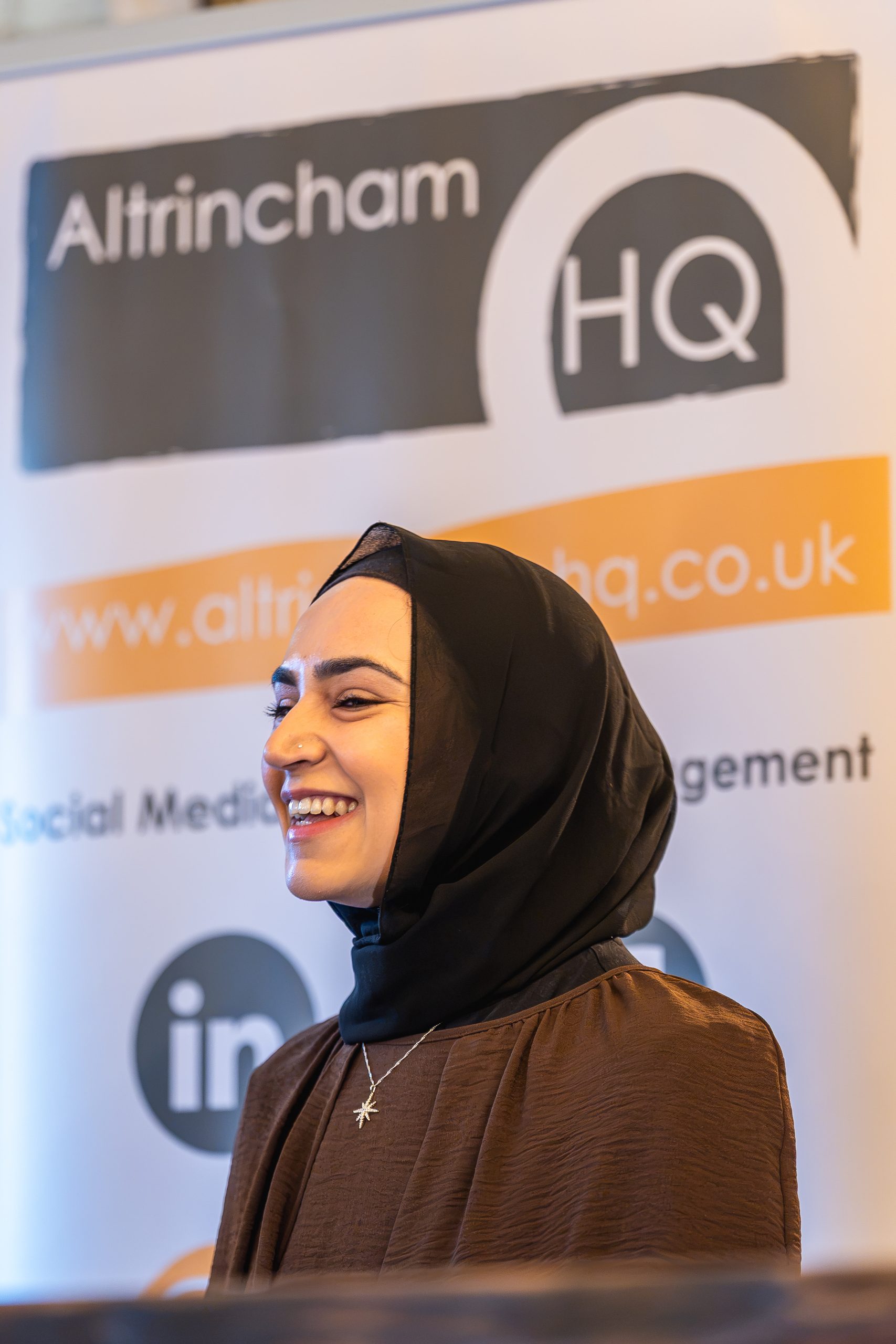
So what is the future for the ADHD coach? Hadeeqa’s passion is coaching and education, but she wants a holistic approach where the clinical side, the education and the coaching interlink, “because you can’t have one without the other.” People get a diagnosis and ask what comes next. Her pharmacy years taught her something here. She had patients with conditions like diabetes and asthma who were not compliant with their medication, and still collected it because they were scared of the doctor. Had they understood what the condition meant for them, she believes, compliance would have improved. She wants the same for neurodiversity. A diagnosis is useful, not least for reasonable adjustments, but “you don’t have to wait to get a diagnosis for things to improve.” That comes down to education and “learning about yourself”.
Alex wrapped it up as three stages. First you suspect you have ADHD and decide whether to learn more or seek a diagnosis. Then you deal with the diagnosis. Then you deal with the medication and whatever else changes afterwards. It is a fitting summary from someone whose own route ran from law, to pharmacy, to ADHD coach without a plan in sight. Hadeeqa’s view is that qualifying in one profession doesn’t mean your career has to follow the path you first pictured. The room agreed.
Connect with Hadeeqa Bibi on LinkedIn here https://www.linkedin.com/in/hadeeqabibi/
Check out the ADHD Coach website here https://www.hadeeqabibiadhdspecialist.co.uk/
With over 80 attendees, Alex & His Sisters continues to be a standout networking event in Altrincham, bringing together inspiring speakers like Hadeeqa who share their real-world insights and practical advice. A big thank you to Hadeeqa for this engaging talk, and to all the attendees who make these events so impactful!
Follow On Eventbrite here
https://www.eventbrite.co.uk/o/alex-mccann-18007752018
Event Photos by Chris Currie
https://www.chriscurriephotography.co.uk/
